
The signs of a horse in chronic pain are often misinterpreted or even ignored. Therefore, the farrier must recognize pain in horses and give professional advice to the owner.
Pain is generally defined as a distressing feeling often caused by intense or damaging stimuli. The International Association for the Study of Pain defines pain as “an unpleasant sensory and emotional experience associated with, or resembling that associated with, actual or potential tissue damage (Raja et al. 2020).”
Therefore, acute pain is a useful and necessary physiological feeling to enable tissue protection, repair and healing. Acute pain motivates organisms to withdraw from damaging situations to protect a damaged body part while it heals and to avoid similar experiences in the future.
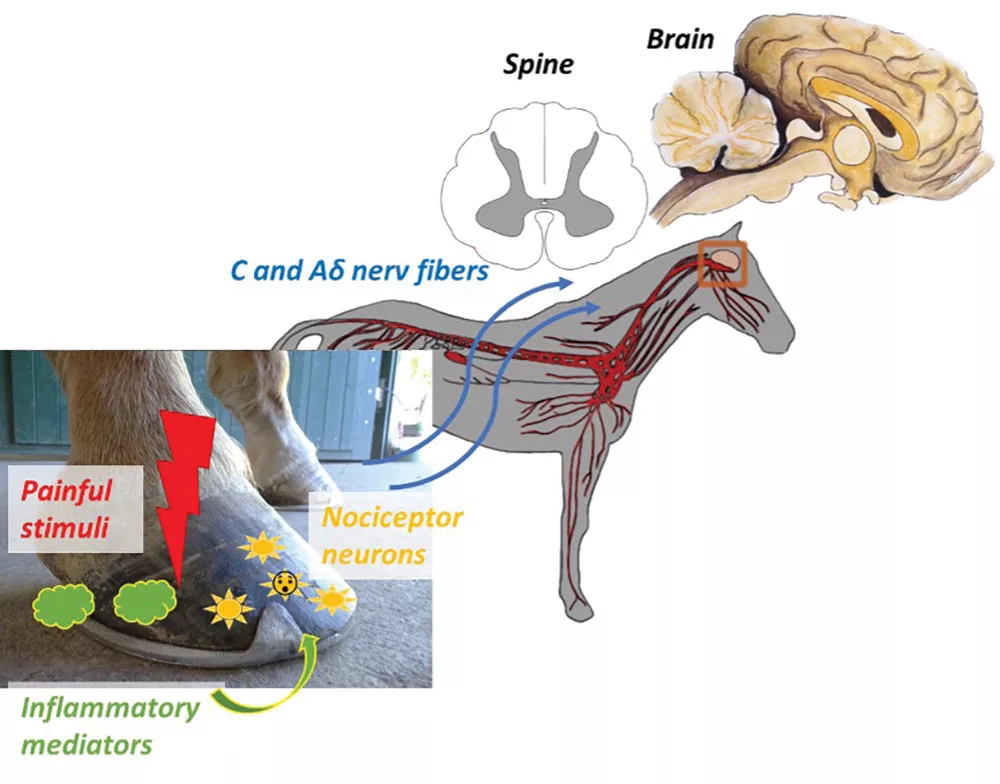
In this context, a (potentially) tissue-damaging stimulus causes the release of inflammatory mediators, which activate the required pain receptors (nociceptors) in the periphery, at the specific location of pain experience.
The nociceptors transfer the signal by nerve fibers to the central nervous system, where the acute pain is recognized and interpreted to induce an appropriate reaction to protect the affected body region (Figure 1).
During acute pain, the cause and location are clearly identified. It’s swift and short-acting if the pain source is resolved. Usually, acute pain is treated with prevention of further tissue damage, environmental changes and pain medication. Typical orthopedic disorders associated with acute pain are hoof abscesses or acute but mild injuries of bones, joints, tendons or ligaments.
The farrier needs to evaluate the gait quality and pattern before and after shoeing. This can also help detect pain-induced lameness. Usually, horses with acute pain caused by orthopedic disorders show a relief posture statically and lameness during locomotion.
It could be shown that horses suffering from acute pain immediately change their individual gait pattern. Usually, the motion pattern in the stance and swing phases is stable and repeatable like a fingerprint. However, with acute pain, it changes immediately to protect the affected body region. After healing of the acute tissue damage, horses usually return to their individual motion pattern.
In addition, horses suffering from acute pain related to structures of the distal limb often show differences in the timing of the motion events compared with the healthy status. In general, the motion asymmetry between the left and right limbs increases. The duration of the dynamic phases, just as landing and breakover, is increased, whereas midstance duration, with maximum weight bearing, is decreased.
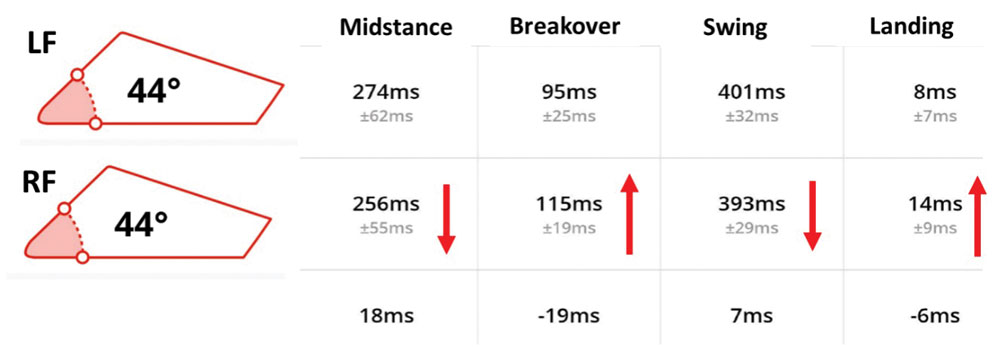
In the dynamic phases, the foot is used more carefully in the presence of pain and weight bearing is kept as short as possible (see above image). Moreover, horses with acute pain try to avoid unnecessary movements, which is seen in a decrease of inter-stride variability.
If acute pain is untreated or a chronic disease with tissue destruction develops, chronic pain can develop into what's referred to as a “chronic pain syndrome.”


